How Do You Know Scones Are Done

Scone Baking
How to bake your best scones.
Somewhere between biscuit and muffin, with a delicately crusty exterior and tender, lite crumb, American-style scones are part of the morn ritual for many of u.s.a.. Scones can be a unproblematic vehicle for jam and butter, or they tin ascent to spectacular heights. But one affair all scones accept in common: they're quick and easy to make, and wonderfully tasty — all on their own, or with a cup of tea or coffee. Join usa every bit we show you the simple path to keen scones.
- Instructions
- Recipes
- Tips
- History
- Tools
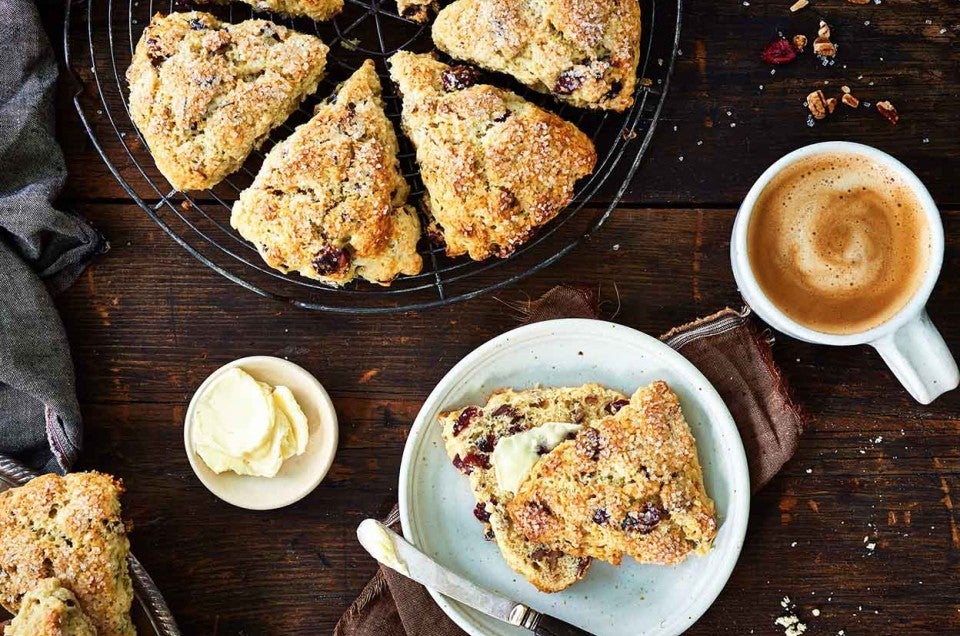
Let's make scones
This unproblematic recipe for Scones is the perfect bare canvass — light-gold outer crust, moist inner nibble, and versatile enough to adapt most add together-ins. Master the piece of cake steps shown here, and you'll larn important techniques that utilise to pretty much every scone recipe.
1. Work the butter
For the nearly tender scones, utilize very common cold butter diced into i/2" chunks. Piece of work the butter into the flour gently just thoroughly with your hands or a pastry blender. For flakier scones, flatten the chunks with your fingers as you get. The finished mixture should exist unevenly crumbly, with some of the butter remaining in larger flattened piece.
2. Bring the dough together
Whisk together the eggs, milk, and vanilla, and pour over the dry ingredients. Using a bowl scraper or spatula, quickly but gently fold everything into a cohesive mass (with perhaps a few floury/dry spots). Avoid over-handling, which makes tough scones.
three. Shape scones
For wedge-shaped scones, split the dough in half and shape into ii 5" to 6" rounds about three/4" thick. Place rounds on a parchment-lined blistering sheet; you'll cut them later. For freeform ("drop") scones, scoop 2" assurance of dough onto a parchment-lined baking canvas, spacing them at least ane" apart. For details on both methods, see an easy fashion to shape scones.
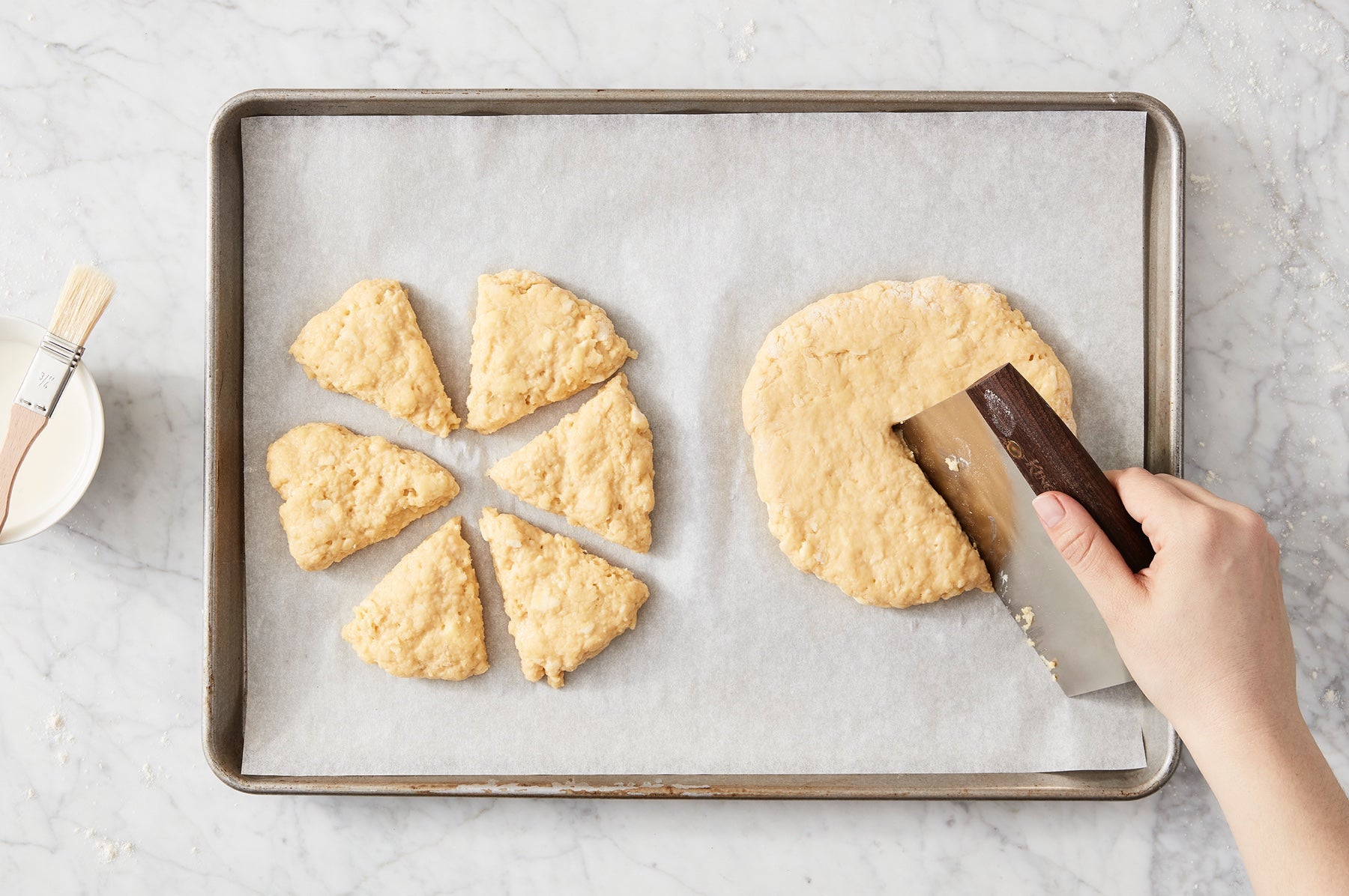
iv. Prepare scones for baking
For best browning, brush rounds (or drop scones) with milk or cream before baking. For added crunch and season, superlative with saccharide (granulated, turbinado, or sparkling) or cinnamon-sugar. Cut each round into 6 or 8 wedges; a demote knife works well here. For soft-sided scones, leave wedges close together; for crispier scones, separate wedges slightly (nigh 1" at their outer border).
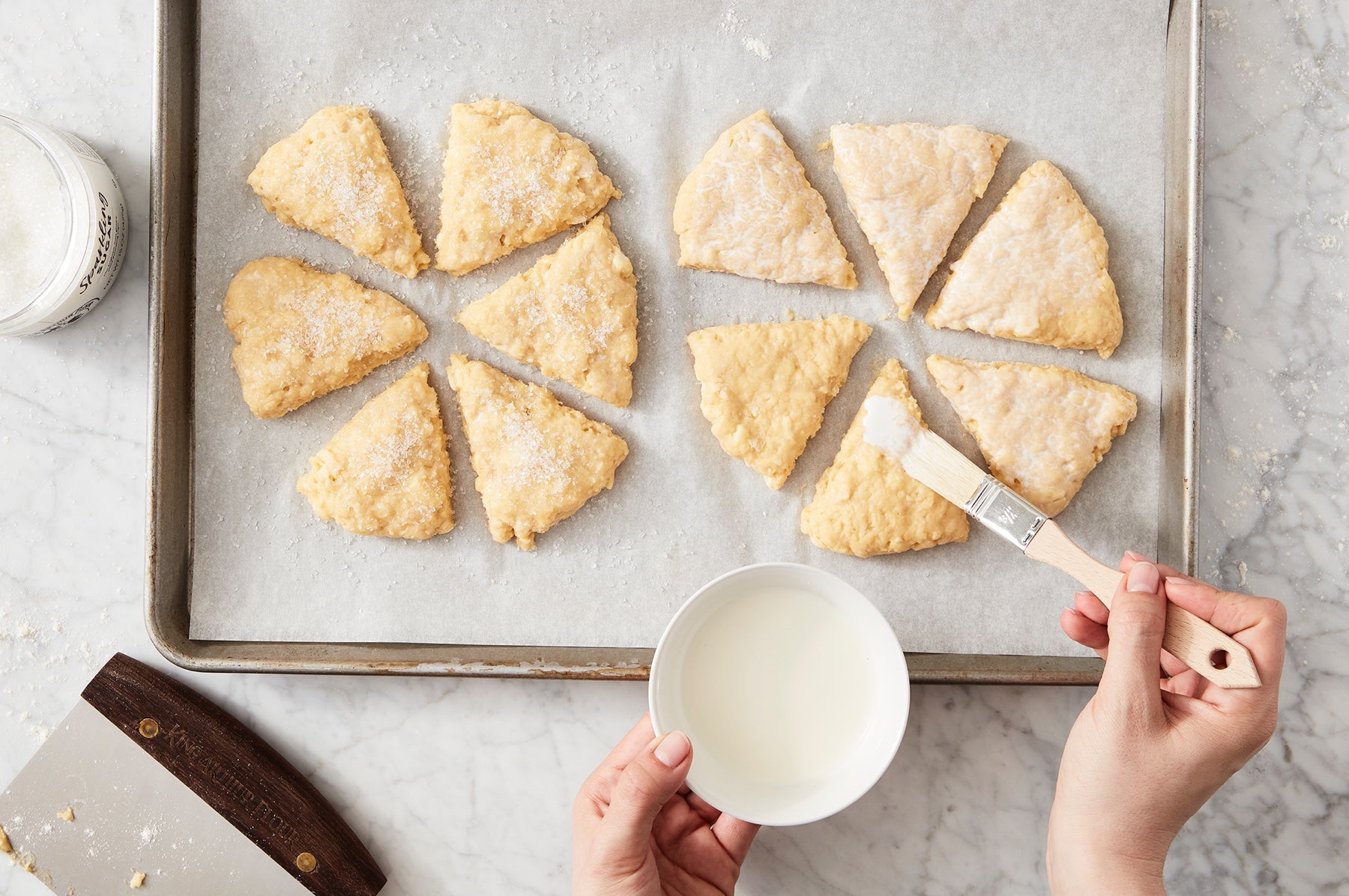
five. Bake scones
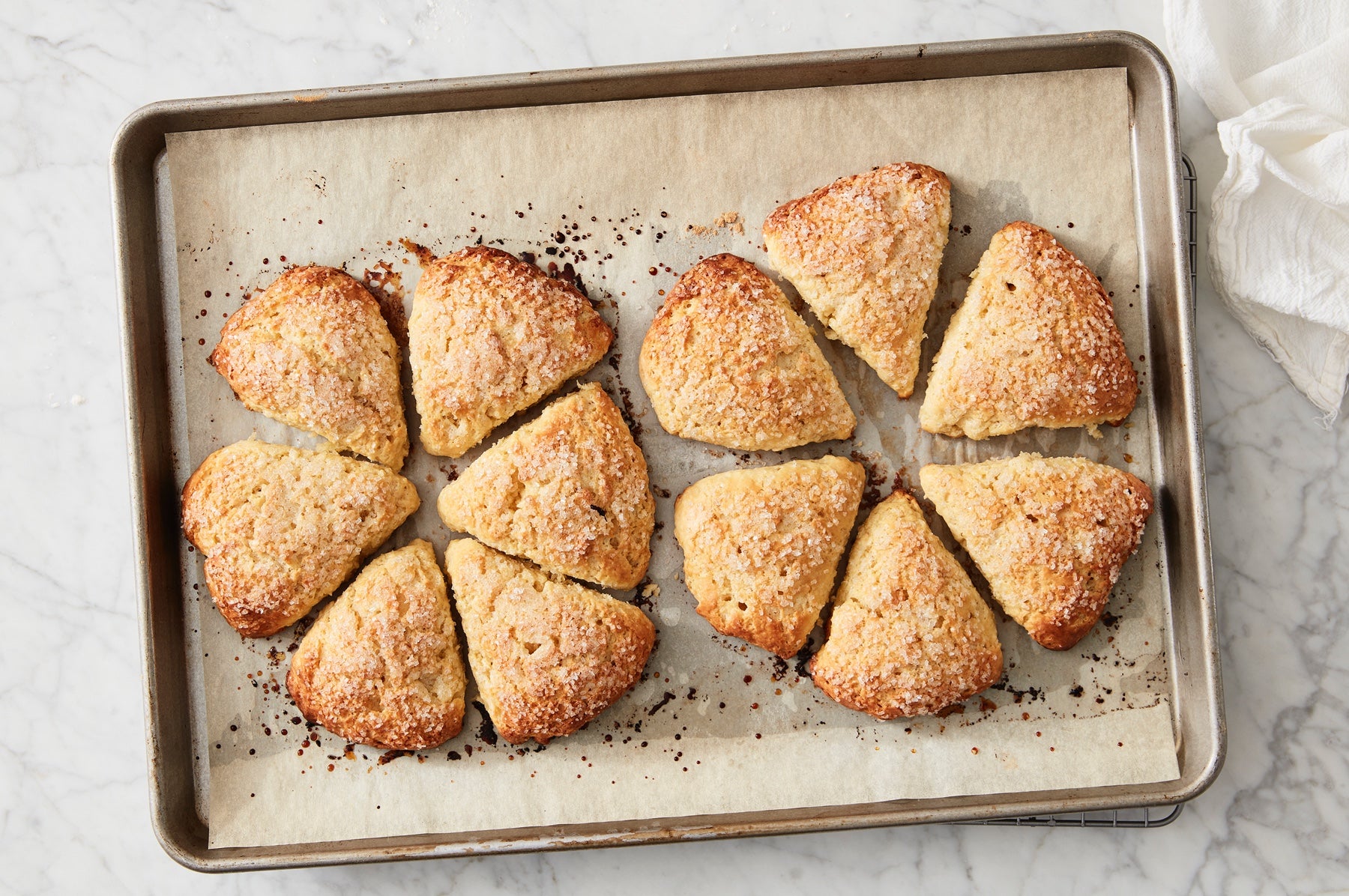
Bake scones in a 425°F oven for 18 to 23 minutes, until they're a very calorie-free aureate brown. Don't over-bake; dark scones will be dry. Break one open to cheque for doneness: the interior shouldn't appear doughy or wet, but should feel nicely moist. Remove scones from the oven and serve warm; or absurd completely on a rack before topping with any optional glaze.
Tips
Perfect your scone technique
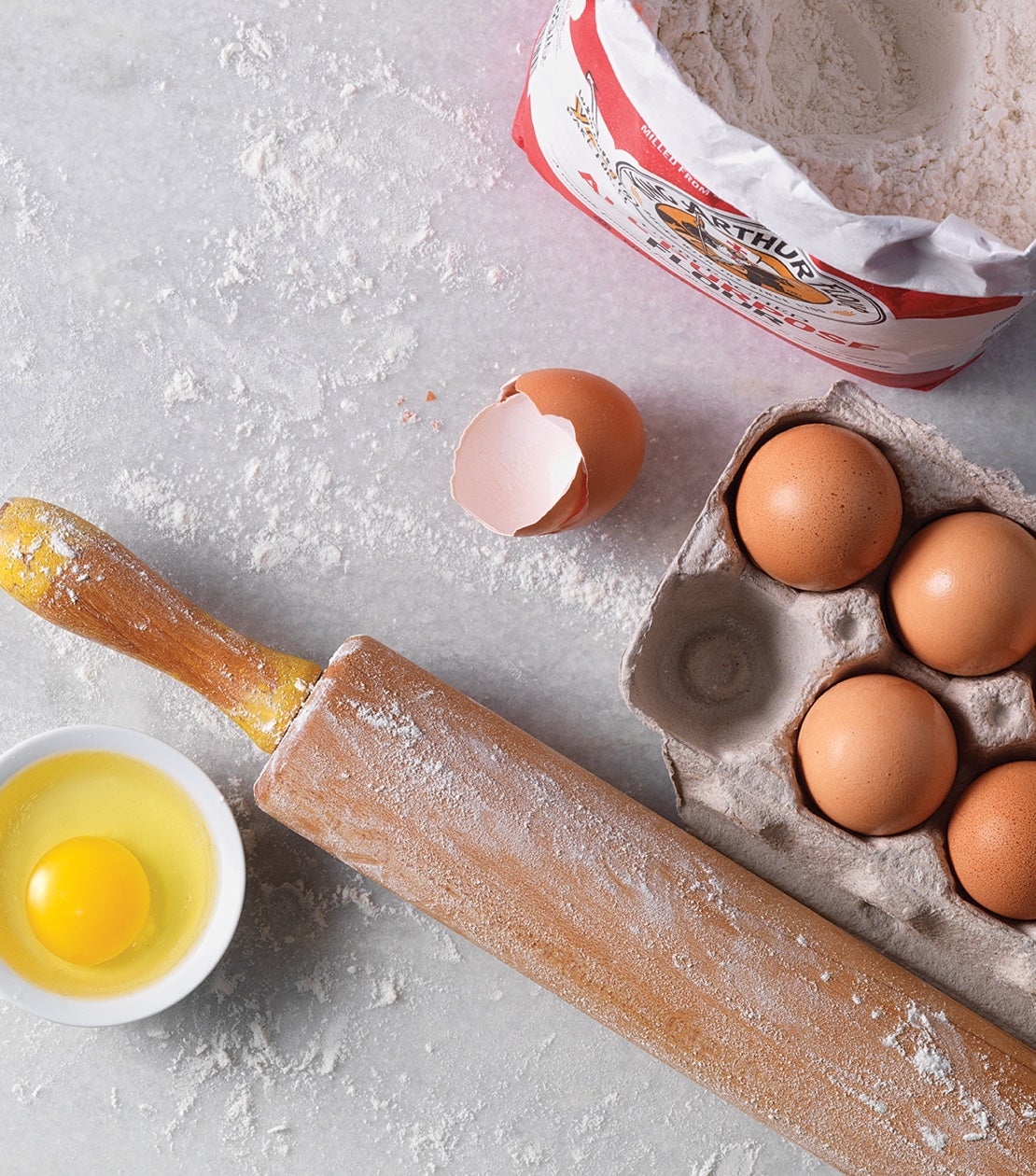
Ingredient selection
- Use all-purpose flour for a college ascension scone that holds its shape nicely, both in and out of the oven. To make more fragile, lower-rising, block-similar scones, substitute cake flour for all-purpose flour. Reduce the liquid in the recipe by one to 2 tablespoons, using simply enough to bring the dough together.
- For scone recipes that don't already phone call for egg: create soft, muffin-like texture and an open nibble by replacing 1/4 loving cup (57g) of the liquid in the recipe with 1 large egg.
- If you choose to make scones with lower-fat dairy (skim milk, low-fatty yogurt), they'll be slightly less tender than those made with whole milk or yogurt, half-and-half, or foam.
- For gluten-free scones, replace the all-purpose flour in your favorite scone recipe with King Arthur Gluten-Free Measure for Mensurate Flour.
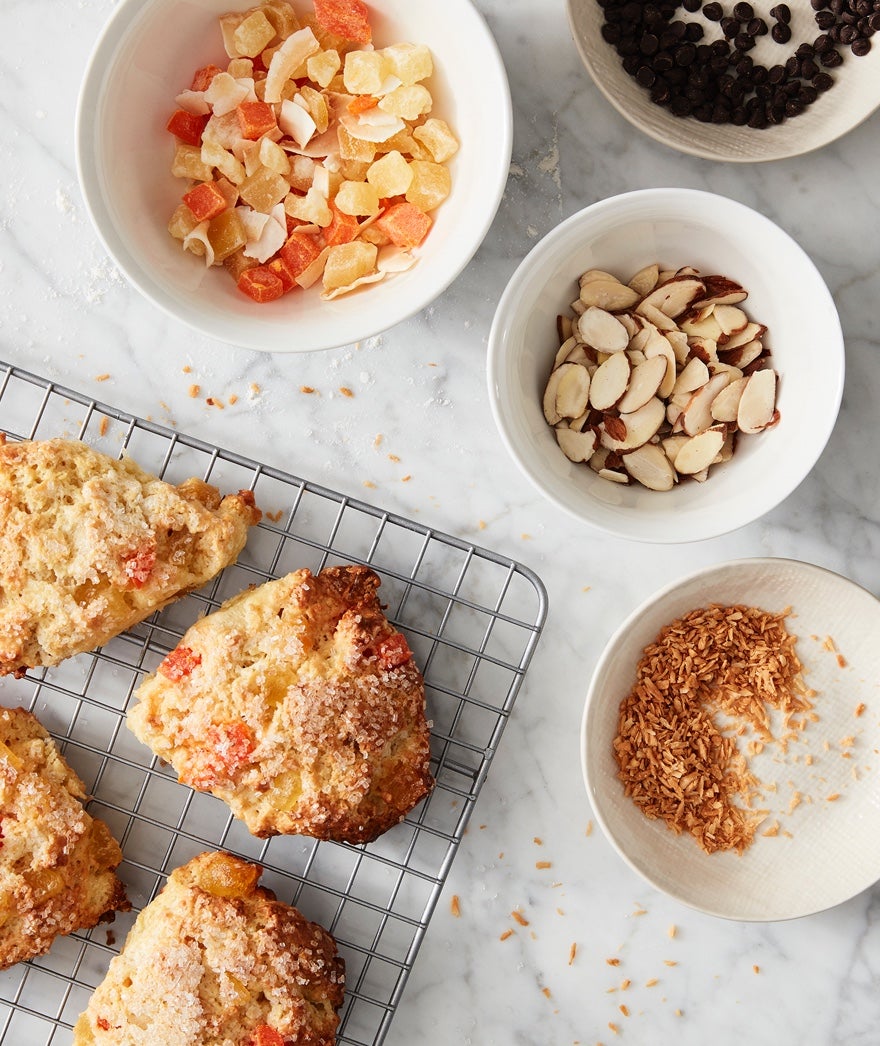
Personalizing
- For scones with added season, stir basics, chips, dried fruit, or Jammy Bits into dry ingredients earlier adding liquids. Use 1/3 cup mix-ins for every loving cup of flour in the recipe. For a collection of our favorite combinations, see Baking customized scones.
- Beware of juicy mix-ins similar fresh fruit; their extra moisture can make scones soggy. For tips on how best to handle and pair fruits, see Summer fruit scones. Consider roasting or grilling fresh fruit to concentrate juices and flavor.
- Scones made with foam (rather than butter) are rich and cake-like, while scones made with butter are tender and flaky. Based on your preference, make your favorite recipe using either butter or cream: Cream scones vs. butter scones.
- Make dairy-complimentary scones by replacing butter with vegan butter and replacing milk or cream with loftier-fat, unsweetened not-dairy milk (e.1000. coconut or soy milk). Read more than about dairy-costless scones and other breakfast staples: How to brand your morning meal without dairy.

Final touches
- Brushing scones with milk or cream earlier blistering yields a aureate crust. For deeper colour and added shine, brush with egg wash: i whole egg mixed with 1 tablespoon h2o and a pinch of salt.
- For added sweet and an elegant look, endeavor this uncomplicated coat: 1 loving cup (113g) confectioners' sugar plus ii to 3 teaspoons milk, water, or juice, enough to make a thick only pourable coat. Drizzle over room-temperature scones.
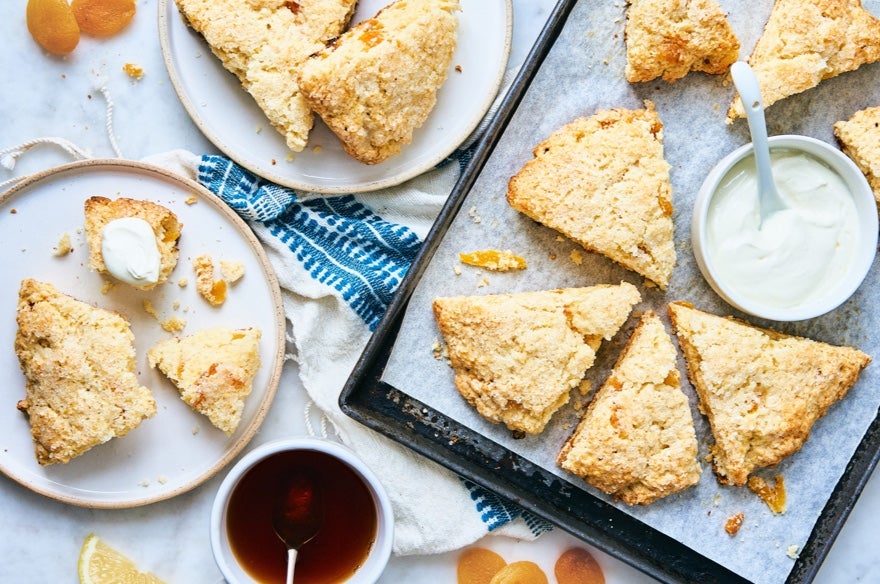
- Enjoy scones in the traditional British manner by serving with Double Devon Cream or Clotted Foam. Both spreads are fabricated from thickened heavy foam; clotted cream is tangier than double cream.
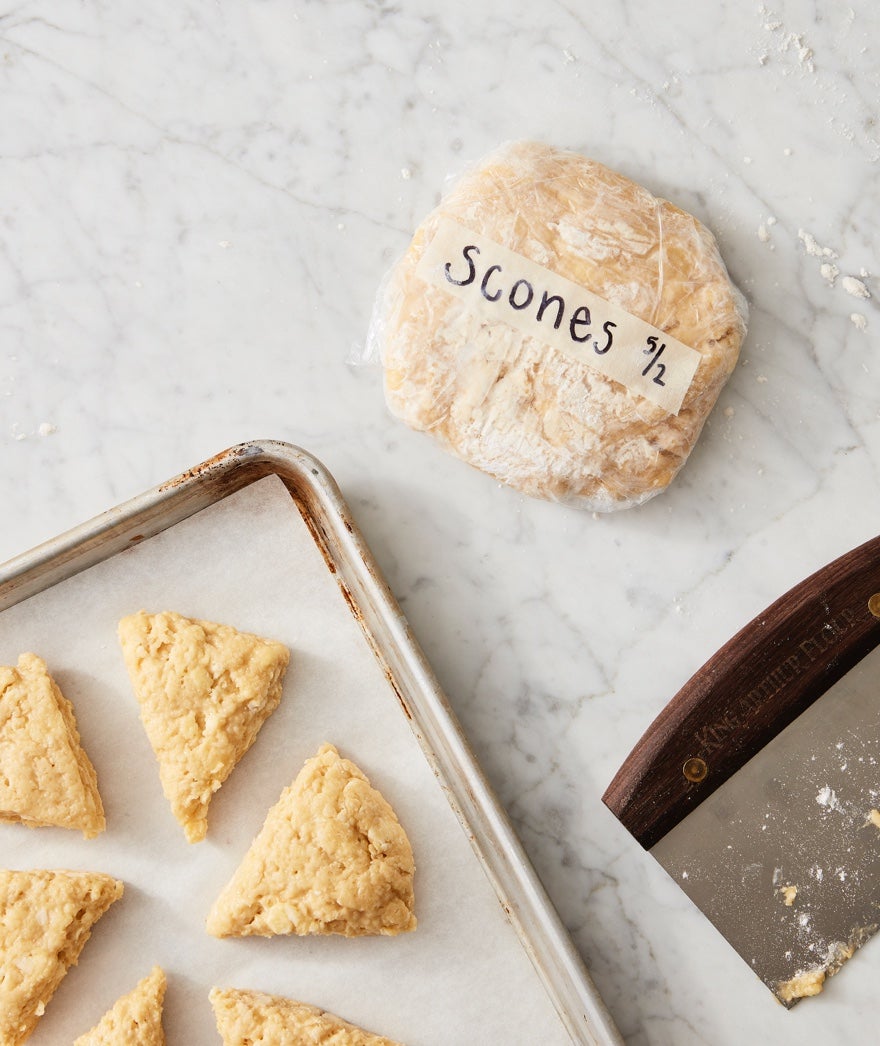
Time savers
- Need to accept a short break? Identify pan of shaped scones into the freezer for up to xxx minutes before baking. This short rest relaxes the gluten, making scones more tender; and cold chills the fat, increasing flakiness.
- Make scone dough upwardly to three days ahead. Shape into 3/4"-thick disks, wrap in plastic, and refrigerate until fix to cut and bake.
- To freeze unbaked scone dough, shape into private drop scones or disks (cut into wedges but non separated). Identify on a blistering sheet, freeze, remove from baking sheet, and store airtight in plastic. When y'all're set to broil, place frozen scones on a baking sail, and thaw at room temperature for 30 minutes or and so, while your oven preheats. Broil co-ordinate to your recipe directions. For details, read Freeze and bake scones. Mini scones may be baked straight from the freezer (no thawing needed); you lot may need to increment bake time by 2 to 3 minutes.
Traditions & history
Scones are a centuries-sometime tradition in Nifty Uk, where they've been enjoyed in one form or another since at least the 1500s. England, Scotland, Ireland, and Wales all have their own versions of this simple breakfast and teatime treat, which has evolved from a very plain mixture of barley or oats and h2o cooked on a griddle to its electric current much more elegant baked incarnation. The modern British scone (pronounced "sgonn," rhymes with gone) is made with white flour, sugar, a leavener, butter, and milk. Similar to American biscuits (though less rich), it's classically served with raspberry or strawberry jam and thickened cream (Clotted Foam or Double Devon Cream).
The American-manner scone (rhymes with rock) features a greater variety of ingredients than its British cousin. Oftentimes enriched with egg, augmented with butter and/or heavy cream, and studded with annihilation from toasted nuts to chocolate chips, the American scone is an eclectic hybrid of biscuit, soft cookie, and cake. Topped with sugar, glazed with icing, and/or served with additional butter and jam, American scones have definitely forged their ain New World path.
Shop
Our Favorite Scone Mixes
Source: https://www.kingarthurbaking.com/learn/guides/scone#:~:text=Bake%20scones%20in%20a%20425,but%20should%20feel%20nicely%20moist.
0 Response to "How Do You Know Scones Are Done"
Post a Comment